
TrueScaleAudio
Compare speakers at true scale
Pick two speakers and see them side by side at their real-world size.
Front view — side by side at true scale
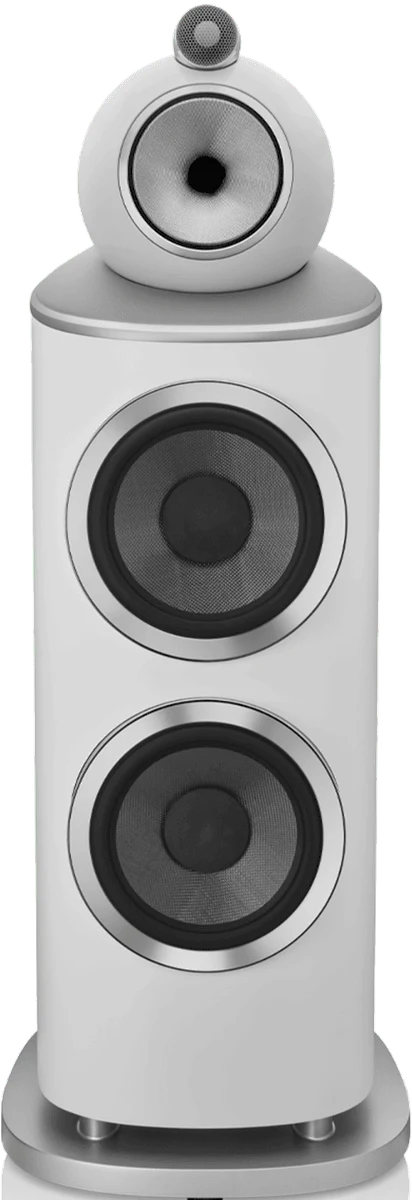
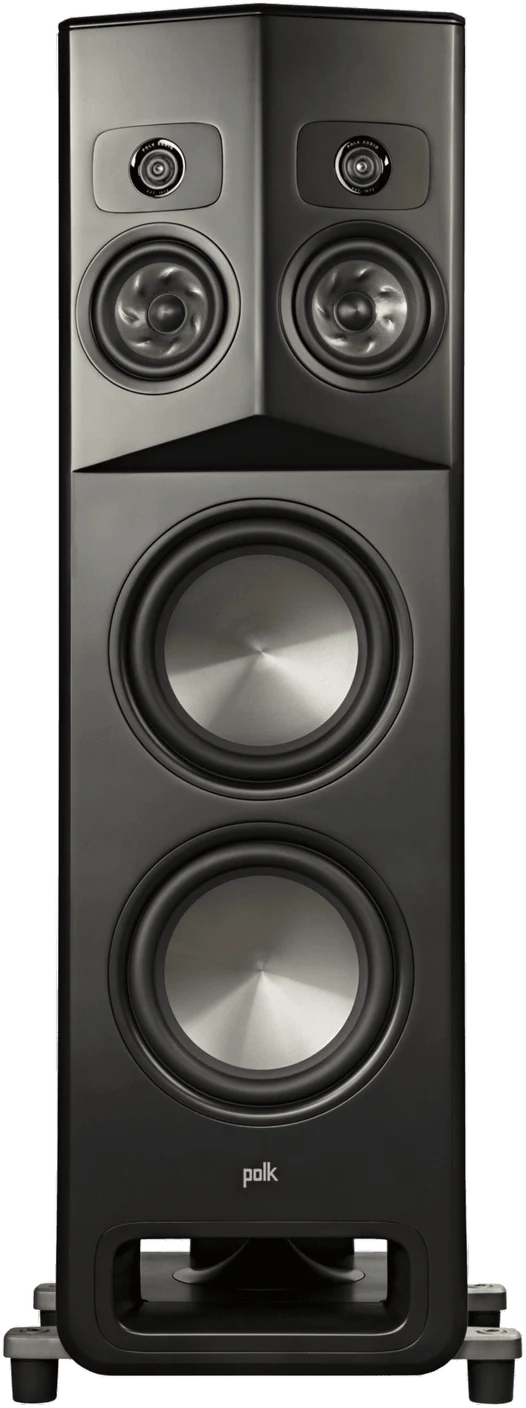
Click either cabinet to swap A ↔ B · Reference height: 1235 mm (123.5 cm) · 1 mm = 0.45 px
Bowers & Wilkins 801 D4vsPolk Legend L800
The Polk Legend L800 stands 123.5 cm tall — about 1.4 cm more than the Bowers & Wilkins 801 D4 at 122.1 cm. On footprint the Polk Legend L800 is the wider cabinet (46.1 cm versus 41.9 cm). At 90 dB against 87 dB, the Bowers & Wilkins 801 D4 is the easier load to drive and plays louder from the same amplifier. The Bowers & Wilkins 801 D4 reaches deeper in the bass, down to 15 Hz versus 32 Hz. On price, the Bowers & Wilkins 801 D4 sits higher — about $35,000 a pair against $5,998 for the Polk Legend L800.
| A | B | |
|---|---|---|
| Manufacturer | Bowers & Wilkins | Polk |
| Model | 801 D4 | Legend L800 |
| HiFi ladder position | #442 of 598 floorstander | #449 of 598 floorstander |
| Height | 1221 mm | 1235 mm |
| Width | 419 mm | 461 mm |
| Depth | 600 mm | 441 mm |
| Weight | 100.6 kg | 53.5 kg |
| Enclosure | bass-reflex-down | bass-reflex-down |
| Drivers | 1× 25 mm tweeter (diamond dome), 1× 150 mm midrange (Continuum cone with FST surround), 2× 250 mm woofer (Aerofoil cone) | 2× 25 mm tweeter (Pinnacle ring radiator), 2× 133 mm midrange (Turbine cone), 2× 254 mm woofer (polypropylene cone) |
| Crossover frequency | — | 370 / 2800 Hz |
| Frequency — low | 15 Hz | 32 Hz |
| Frequency — high | 28000 Hz | 38000 Hz |
| Sensitivity | 90 dB | 87 dB |
| Impedance | 8 Ω | 4 Ω |
| Recommended amp | 50–1000 W | 25–300 W |
| MAP (USD) | $35,000 / pair | $5,998 / pair |
| Where to buy | Check availability ↗ | Check availability ↗ |
| Brand website | bowerswilkins.com ↗ | polkaudio.com ↗ |
| Product page | Open product page ↗ | Open product page ↗ |
Larger value highlighted in green. For low-frequency extension, lower Hz = greater bass reach, so the deeper side is highlighted.