
TrueScaleAudio
Compare speakers at true scale
Pick two speakers and see them side by side at their real-world size.
Front view — side by side at true scale
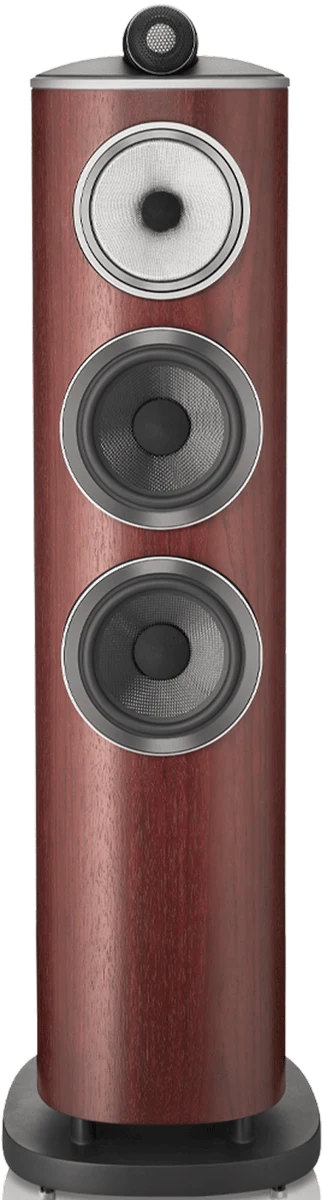
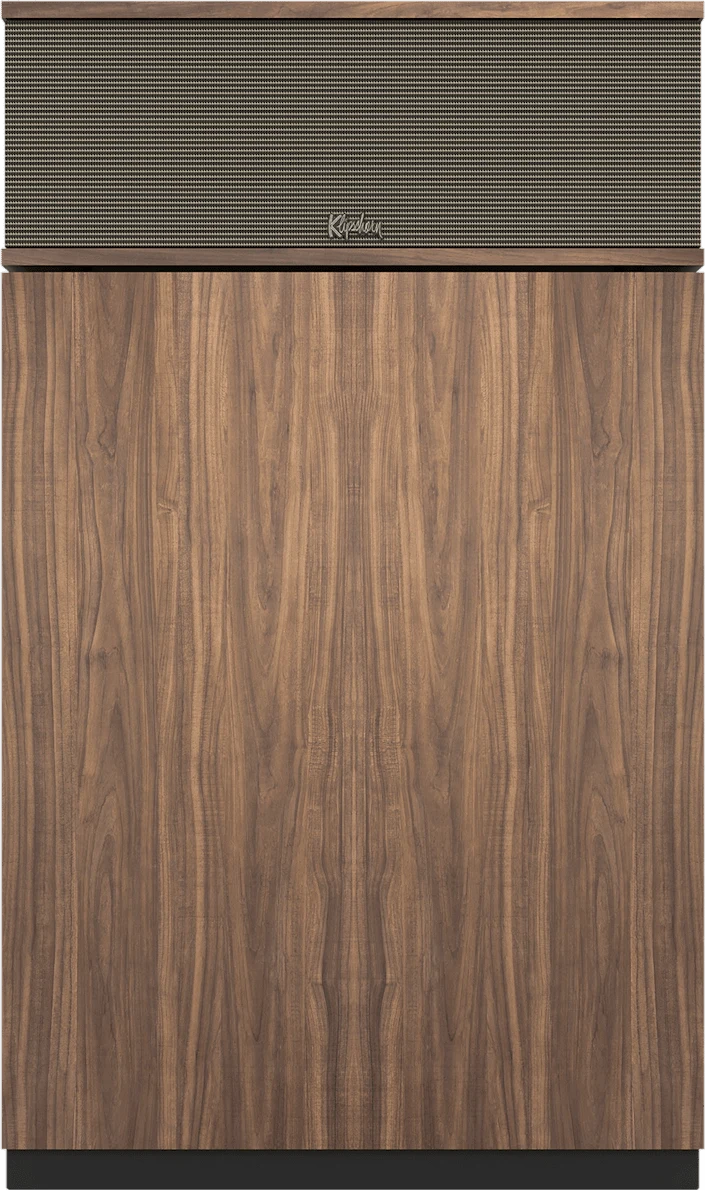
Click either cabinet to swap A ↔ B · Reference height: 1352 mm (135.2 cm) · 1 mm = 0.41 px
Bowers & Wilkins 804 D4vsKlipsch Klipschorn AK7
The Klipsch Klipschorn AK7 stands 135.2 cm tall — about 28.1 cm more than the Bowers & Wilkins 804 D4 at 107.1 cm. On footprint the Klipsch Klipschorn AK7 is the wider cabinet (80.1 cm versus 28.8 cm). At 103 dB against 89 dB, the Klipsch Klipschorn AK7 is the easier load to drive and plays louder from the same amplifier. The Bowers & Wilkins 804 D4 reaches deeper in the bass, down to 24 Hz versus 34 Hz. Low frequencies come from a 165 mm cone on the Bowers & Wilkins 804 D4 and a 381 mm cone on the Klipsch Klipschorn AK7. On price, the Klipsch Klipschorn AK7 sits higher — about $19,998 a pair against $13,000 for the Bowers & Wilkins 804 D4.
| A | B | |
|---|---|---|
| Manufacturer | Bowers & Wilkins | Klipsch |
| Model | 804 D4 | Klipschorn AK7 |
| HiFi ladder position | #249 of 601 floorstander | #521 of 601 floorstander |
| Height | 1071 mm | 1352 mm |
| Width | 288 mm | 801 mm |
| Depth | 391 mm | 715 mm |
| Weight | 36.85 kg | 118 kg |
| Enclosure | bass-reflex-down | — |
| Drivers | 1× 25 mm tweeter (diamond dome), 1× 130 mm midrange (Continuum cone with FST surround), 2× 165 mm woofer (Aerofoil cone) | 1× 25 mm tweeter (K-771 compression diaphragm), 1× 51 mm midrange (K-933-HP compression diaphragm), 1× 381 mm woofer (K-33-E fiber-composite cone) |
| Crossover frequency | — | 380 / 2900 Hz |
| Frequency — low | 24 Hz | 34 Hz |
| Frequency — high | 28000 Hz | 19000 Hz |
| Sensitivity | 89 dB | 103 dB |
| Impedance | 8 Ω | 8 Ω |
| Recommended amp | 50–200 W | — |
| MAP (USD) | $13,000 / pair | $19,998 / pair |
| Where to buy | Check availability ↗ | Check availability ↗ |
| Brand website | bowerswilkins.com ↗ | klipsch.com ↗ |
| Product page | Open product page ↗ | Open product page ↗ |
Larger value highlighted in green. For low-frequency extension, lower Hz = greater bass reach, so the deeper side is highlighted.