
TrueScaleAudio
Compare speakers at true scale
Pick two speakers and see them side by side at their real-world size.
Front view — side by side at true scale
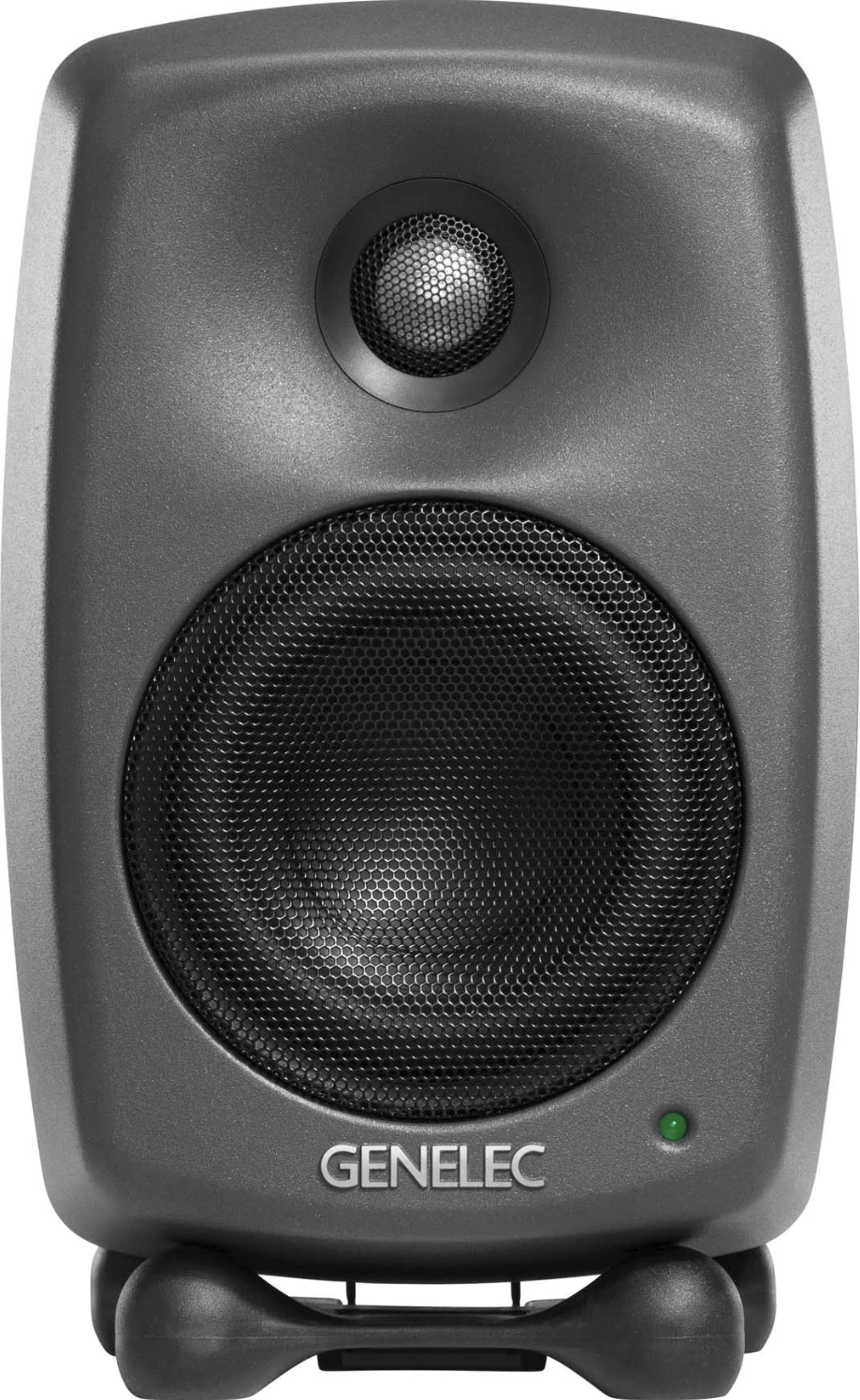

Click either cabinet to swap A ↔ B · Reference height: 242 mm (24.2 cm) · 1 mm = 2.31 px
Plan view — footprint at true scale
Seen from above, both pushed back to the same front wall — the wall behind the speakers. Only height, width and depth are published, so each cabinet is drawn as a rectangle: this is the surface a speaker reserves, not its exact outline. A curved or tapered cabinet takes a little less. How far a speaker should sit from the wall is yours to set: makers rarely publish it, and the ones that do disagree by design.
Performance — where each one sits in the catalog
| Bass reach | Treble reach | Cone area | |
|---|---|---|---|
| 8320A | 55 Hz | 23 kHz | 89 cm² |
| KH 80 DSP | 57 Hz | 21 kHz | 83 cm² |
| Median | 39 Hz | 24 kHz | 332 cm² |
How to read this chart
Each axis spans the range the 114 studio monitors in the catalog actually cover, so equal distance means equal difference — and for cone area and the two frequencies, which are read as ratios, equal distance means equal ratio. The dashed inner ring is where the scale starts, not zero. Ranked within a class because a bookshelf measured against floorstanders is feeble on every axis for the single reason that it is a bookshelf. Cone area is summed from the drive units — no maker publishes it. Bass and treble reach are quoted to different tolerances and only 56% of the catalog says which, so read those two axes as approximate. The grey outline is the median of the pair's own class, the 96 active studio monitors — same type, same side of the active/passive line, which matters because the two halves are not the same product: the median active bookshelf carries 155 cm² of cone against the passive median's 219. Median rather than mean, because a handful of very large cabinets would drag a mean above most of the class it claims to describe. Not shown: Sensitivity, Easy load — neither maker publishes a figure. Active speakers quote no sensitivity and no impedance, because with the amplifier inside both describe the electronics rather than the cabinet.
Genelec 8320AvsNeumann KH 80 DSP
The Genelec 8320A and the Neumann KH 80 DSP stand at nearly the same height, around 24.2 cm tall. The Genelec 8320A reaches deeper in the bass, down to 55 Hz versus 57 Hz. The Genelec 8320A is rear-ported and the Neumann KH 80 DSP is front-ported. On price, the Genelec 8320A sits higher — about $850 a pair against $599 for the Neumann KH 80 DSP.
| A | B | |
|---|---|---|
| Manufacturer | Genelec | Neumann |
| Model | 8320A | KH 80 DSP |
| HiFi ladder position | #7 of 114 floorstander | #2 of 114 floorstander |
| Height | 242 mm | 233 mm |
| Width | 151 mm | 154 mm |
| Depth | 142 mm | 194 mm |
| Footprint | 214 cm² | 299 cm² |
| Space taken | 5.2 L | 7 L |
| Weight | 3.2 kg | 3.5 kg |
| Enclosure | bass-reflex-rear | bass-reflex-front |
| Drivers | 1× 19 mm tweeter (metal dome), 1× 105 mm mid-bass (cone) | 1× 25 mm tweeter (alloy fabric dome), 1× 100 mm woofer (composite sandwich cone) |
| Crossover frequency | 3000 Hz | 1800 Hz |
| Frequency — low | 55 Hz | 57 Hz |
| Frequency — high | 23000 Hz | 21000 Hz |
| Sensitivity | — | — |
| Impedance | — | — |
| Recommended amp | — | — |
| MAP (USD) | $850 each | $599 each |
| Where to buy | Check availability ↗ | Check on Amazon ↗ |
| Brand website | genelec.com ↗ | neumann.com ↗ |
| Product page | Open product page ↗ | Open product page ↗ |
Larger value highlighted in green. For low-frequency extension, lower Hz = greater bass reach, so the deeper side is highlighted.